Safe Pet Car Travel: Harnesses, Carriers, Calm Trips
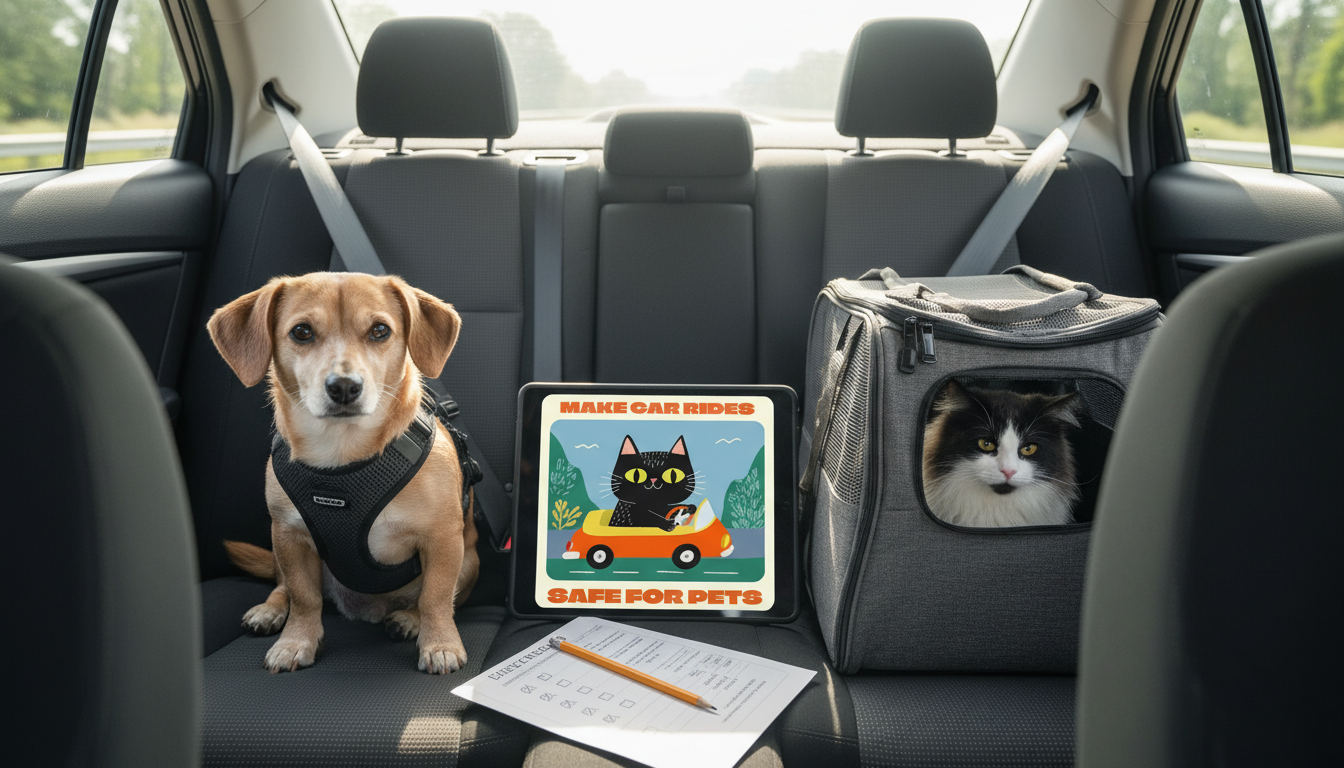
Safe Pet Rides: Practical Steps for Calm, Secure Car Trips With Dogs and Cats
Car travel can be stressful and risky for pets when they’re unrestrained, overheated, or anxious. A safer ride is built on a few repeatable habits: choosing the right restraint, preparing the vehicle, preventing motion sickness, and planning breaks. The goal is simple—reduce distraction for the driver while keeping pets protected and comfortable from driveway to destination.
Start With the Right Setup: Restraint, Placement, and Ventilation
The safest car ride starts before the engine turns over. The right restraint keeps your pet from becoming a projectile in a sudden stop and prevents roaming that can interfere with steering or braking.
- Choose a restraint method that matches the pet’s size and behavior: a crash-tested harness (dogs), a secured carrier (cats and small dogs), or a well-secured travel crate when appropriate.
- Place carriers or crates in the back seat or in a cargo area that’s separated from passengers, then secure them with seat belts or anchor points so they can’t slide or tip.
- Keep pets away from the front seat and airbags; even low-speed impacts can cause serious injuries.
- Maintain airflow: aim vents toward the pet’s area, avoid blocking carrier sides, and keep the cabin at a stable, comfortable temperature.
- Never allow pets to ride with their head out the window; road debris, insects, and sudden stops can cause injury.
Common Car-Ride Safety Options (Quick Comparison)
| Option | Best for | Pros | Watch-outs |
|---|---|---|---|
| Crash-tested harness + seat belt | Most medium/large dogs | Allows sitting/lying down; reduces driver distraction | Fit must be exact; attach to seat belt correctly |
| Hard-sided carrier (belt-secured) | Cats and small dogs | Containment + reduced escape risk; helps anxious pets feel enclosed | Must be secured to prevent shifting; ensure ventilation |
| Travel crate (secured) | Dogs used to crates; longer trips | Stable space; can reduce anxiety when crate-trained | Requires cargo space and strong tie-downs; avoid loose placement |
| Back-seat barrier + harness | Larger dogs in SUVs/wagons | Prevents climbing into front; more room | Barrier alone isn’t restraint; still use harness/tether |
Pre-Trip Routine: Make the Car a Predictable, Low-Stress Space
Many pets struggle in the car because every ride feels unfamiliar. A repeatable routine builds predictability, which is calming for both dogs and cats.
- Practice short sessions: sit in the parked car, then take brief drives, rewarding calm behavior to build positive association.
- Schedule a light meal several hours before departure; avoid a full meal right before the ride to reduce nausea risk.
- Take a potty break just before loading up; pack waste bags and a small towel for quick cleanups.
- Bring familiar comfort items: a favorite blanket, a carrier liner with home scent, or a durable chew (only if safe and supervised).
- Do a quick safety check: collar/harness fit, ID tags, microchip info, and a current photo in case of separation.
For additional travel safety guidance from veterinary professionals, the American Veterinary Medical Association (AVMA) has practical tips that reinforce restraint, ventilation, and heat-safety basics.
During the Drive: Reduce Distractions and Keep Pets Comfortable
Once you’re on the road, the priorities are consistent: keep the pet secured, manage temperature, and limit triggers that increase stress or nausea.
- Keep pets restrained for the entire drive; a loose pet can interfere with steering/braking and may be injured in sudden stops.
- Plan breaks every 2–3 hours for longer trips: hydration, a leashed walk for dogs, and a quiet check-in for cats (avoid opening doors widely).
- Manage temperature carefully: never leave a pet alone in a parked car; cabin temperatures can rise quickly even on mild days.
- Use a calm environment: moderate music volume, avoid sudden loud sounds, and keep windows mostly up to reduce stress and debris exposure.
- Offer water in small amounts during breaks; avoid large gulps that can worsen nausea in sensitive pets.
For emergency readiness beyond the ride itself, the American Red Cross pet preparedness resources are a smart companion to any road-trip plan.
Motion Sickness, Anxiety, and Special Cases
If you’re traveling across state lines or staying in shared lodging, it also helps to review general health and prevention guidance from the CDC Healthy Pets, Healthy People resources.
Stress-Free Packing: A Simple Checklist That Prevents Last-Minute Mistakes
If you like keeping pet items separate from everyday gear, a dedicated organizer can help. The Waterproof Multifunctional 1.5L Bike Frame & Saddle Storage Bag is a compact option for holding wipes, waste bags, a small towel, or travel-size first-aid supplies.
Digital Guide and Printable Checklist for Confident Pet Travel
For a step-by-step system you can reuse for weekend errands or long road trips, see the Safe Pet Rides digital guide with printable checklist.
FAQ
Is it safer for a dog to ride in a harness or a crate?
Both can be safe when they’re properly secured: a crash-tested harness attached correctly to a seat belt system can limit dangerous movement, while a secured crate can provide a stable, enclosed space. The best choice depends on your dog’s size, training, behavior in the car, and how much room your vehicle has.
How can motion sickness be reduced for pets during car rides?
Feed a light meal several hours before travel, keep the cabin cool with steady airflow, and build tolerance with short practice drives. Smooth acceleration/braking and regular breaks help, and persistent symptoms are worth discussing with a veterinarian for additional options.
Can a cat travel safely without a carrier?
No—an unrestrained cat can bolt when a door opens, wedge under pedals, or be seriously injured in a sudden stop. A well-ventilated carrier that’s secured with a seat belt is the safest approach, especially when loading and unloading.






Leave a comment