Cordless Pole Saw vs Battery Tree Trimmer: Best Pick
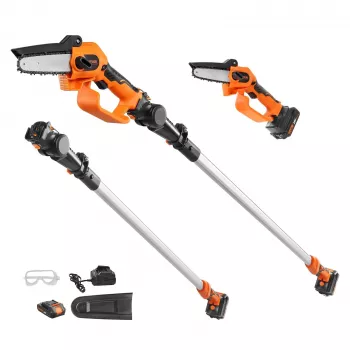
Cordless Pole Saw Chainsaw vs. Battery-Powered Tree Trimmer: What Fits Your Yard Work
Choosing between a cordless pole saw chainsaw and a battery-powered tree trimmer usually comes down to reach, cutting capacity, control, and how often branches need to be removed versus shaped. The right tool can reduce ladder time, speed up cleanup, and help you make cleaner cuts that are easier on living trees.
What Each Tool Is Best At
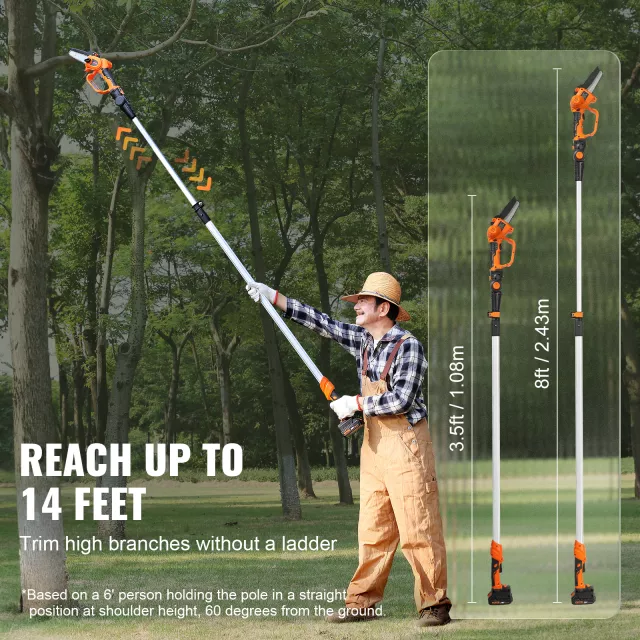
A cordless pole saw chainsaw is built to remove higher limbs with a small chainsaw head mounted on an extension pole. The main advantage is safer overhead cutting from the ground—especially for routine limb removal, thinning, and storm cleanup when branches are hanging above head height.
A battery-powered tree trimmer often refers to compact, quick-cut tools used for pruning and shaping. Many models behave like mini chainsaws with a small bar and chain, but they prioritize maneuverability for frequent touch-ups—think shoulder-height branches, tight spaces near fences, and quick cuts on smaller limbs.
There’s real overlap: some “tree trimmers” are essentially mini chainsaws, and some pole saws can be used without the pole. In practice, the biggest day-to-day difference is whether an extension pole is included (and how stable it feels when extended).
Reach and Working Position
Reach is the pole saw’s biggest advantage. More pole length means less ladder work, and the safest workflow keeps both feet on the ground whenever possible. That said, longer reach also increases leverage, which can make the tool feel heavier and more fatiguing—especially when cutting overhead with the pole fully extended.
Compact trimmers/mini chainsaws shine when a pole feels awkward: pruning between shrubs, trimming near a fence line, or working at chest height where you want precision and visibility. If most of your cuts happen within arm’s reach, a handheld tool can feel faster and more controlled.
For either tool, pay attention to extension locks and couplers. Wobble leads to crooked cuts, binding, and extra strain on your arms. Also plan a clear fall zone—extra reach can help you position yourself so a limb drops safely away from roofs, gutters, vehicles, and plantings.
Cutting Power and Branch Size
Battery voltage (like 20V) can hint at a tool’s power class, but real cutting performance depends on motor design, chain speed, bar length, and—most importantly—chain sharpness. For green, fibrous wood, a sharp chain and steady feed pressure often beat forcing the cut, which drains the battery and can increase kickback risk.
Pole saws typically handle small-to-medium limbs well, especially for limbing and canopy thinning. When branches regularly push beyond a pole saw’s comfortable capacity, a standard chainsaw (used from a stable position) is often the better tool—or it may be time to schedule professional pruning for high-risk limbs under tension.
Compact battery trimmers and mini chainsaws can be surprisingly capable on moderate branches, but they’re at their best for frequent light cuts and bucking downed limbs into manageable pieces after pruning.
Control, Safety, and Cut Quality
Basic protective gear makes a big difference: eye protection, gloves, and sturdy footwear are minimums, and a hard hat is worth considering when working under limbs. For additional guidance, review chainsaw safety resources from OSHA and pruning best practices from the International Society of Arboriculture (ISA).
Battery Runtime, Charging, and Convenience
One 2-in-1 Tool vs. Separate Tools
Quick Comparison: Pole Saw Chainsaw vs. Battery Tree Trimmer
| Feature | Cordless Pole Saw Chainsaw | Battery-Powered Tree Trimmer / Mini Chainsaw |
|---|---|---|
| Best use | Overhead branch removal, canopy thinning, storm cleanup at height | Fast pruning and bucking fallen limbs at close range |
| Reach | High (extension pole) | Low to medium (handheld) |
| Control in tight areas | Moderate (long tool can feel bulky) | High (compact body, easier positioning) |
| Fatigue | Higher when extended overhead | Lower for short sessions; can rise with continuous cutting |
| Typical branch size comfort | Small-to-medium limbs (varies by model) | Small-to-medium limbs; best for frequent light cuts |
| Safety advantage | Reduces ladder use for many jobs | Better visibility and stability for shoulder-height work |
When the 2-in-1 Cordless Pole Saw & Mini Chainsaw Makes Sense
For a versatile option that switches between reach and close-up work, consider the 2-in-1 Cordless Pole Saw & Mini Chainsaw – 20V Battery Powered Tree Trimmer. Pairing it with a simple maintenance kit (bar/chain oil, a small brush, and a sharpening solution that matches the chain) helps keep cutting smooth and battery draw low.
For longer outdoor work sessions where you’d rather keep your phone in your pocket and still have audio, the 90W Peak 50W RMS Bluetooth Speaker can be a convenient yard companion—especially for cleanup time when the cutting is done and you’re hauling brush.
Care and Maintenance That Protects the Battery and the Chain
FAQ
Can a cordless pole saw cut thick branches safely?
Pole saws are generally intended for small-to-medium limbs. For thicker or heavy branches, use proper pruning cuts to prevent tearing, avoid cutting directly overhead, and switch to a standard chainsaw from a stable position (or hire a pro) if the limb is large or under tension.
What is the difference between a mini chainsaw and a tree trimmer?
Many battery “tree trimmers” are essentially mini chainsaws with a small bar and chain. The practical difference is size and intended branch diameter, plus whether the tool includes an extension pole for overhead reach.
How long does a 20V battery typically last for trimming branches?
It depends on wood type, branch diameter, chain sharpness, and how continuously you’re cutting. Intermittent pruning usually lasts much longer than nonstop bucking, so a spare battery is the simplest way to keep working without waiting on a recharge.






Leave a comment